

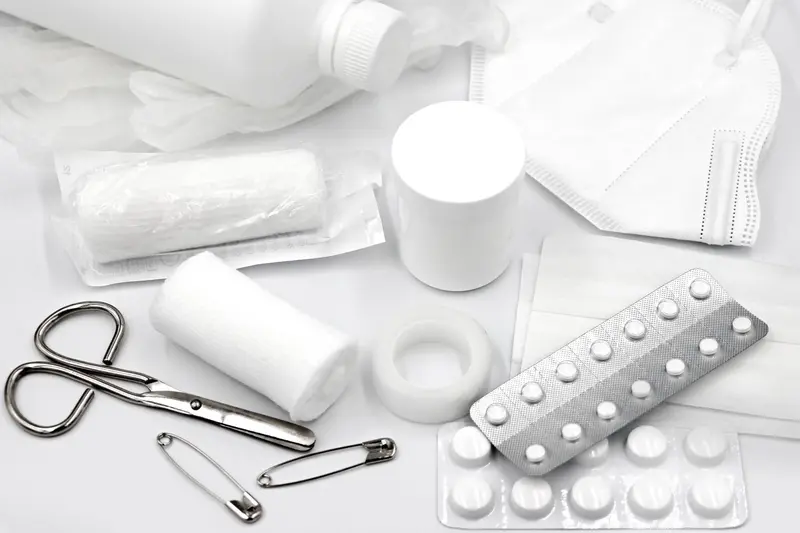
- A basic kit covers cuts, burns, sprains, fever and dehydration, plus emergency numbers.
- Keep it in one labelled box, somewhere cool and dry that adults can reach quickly.
- Check the kit every few months and replace anything used, opened or expired.
- A first aid kit is for minor problems; call Rescue 1122 or Edhi 115 for emergencies.
Small accidents happen in every household: a kitchen burn, a cut on a broken glass, a child with a fever at midnight, or a stomach upset after a wedding dinner. Having the right things in one place means you can deal with minor problems calmly and quickly. This home first aid kit checklist is written for Karachi families, with our climate and local emergency services in mind.
What should a home first aid kit include?
A home first aid kit should cover the most common minor problems: cuts and grazes, burns, sprains, fever and dehydration. That means dressings, bandages, an antiseptic, a burn cream, ORS sachets, a thermometer, basic tools and a written list of emergency numbers. Add personal items your family needs.
Here is a practical checklist, grouped by job. You can find most of these in our first aid range.
| Category | Item | What it is for |
|---|---|---|
| Wound care | Adhesive Bandage Strips (assorted sizes) | Small cuts and grazes |
| Wound care | Sterile Gauze Swabs | Cleaning wounds and covering larger areas |
| Wound care | Medical tape | Holding gauze in place |
| Wound care | Antiseptic Liquid | Cleaning around minor wounds, as directed on the label |
| Support | Crepe Bandage | Supporting a sprain or holding a dressing |
| Burns | Burn Relief Cream | Minor burns, after cooling with water |
| Fluids | ORS Low-Osmolarity Sachets | Replacing fluids and salts during diarrhoea or vomiting |
| Monitoring | Digital Thermometer | Checking for fever |
| Tools | Scissors, tweezers, safety pins | Cutting tape, removing splinters, securing bandages |
| Protection | Disposable gloves | Protecting you and the injured person |
| Information | Emergency numbers and a family medicines list | Getting help quickly |
Why is ORS so important in a Karachi first aid kit?
ORS helps replace the water and salts the body loses through diarrhoea and vomiting, which can quickly lead to dehydration in hot weather. The World Health Organization recommends low-osmolarity ORS for treating dehydration caused by diarrhoea. Keep several sachets in your kit, especially in summer and if you have young children.
A few practical points:
- Mix it exactly as the sachet says, using the stated amount of clean, safe drinking water. Too much or too little water changes how well it works.
- Use it within the time on the sachet once mixed, then discard what is left.
- Do not add sugar or salt to ORS.
- Seek medical help if someone cannot keep fluids down, has blood in their stool, is very drowsy, or if a baby has fewer wet nappies than usual.
Our digestive health range has ORS and other stomach-care products.
Which devices are worth having at home?
A reliable digital thermometer is the one device every home should have. Depending on your family’s health, a blood pressure monitor, a glucose meter or a pulse oximeter may also be useful, but only if someone knows how to use it and what the readings mean. Discuss home monitoring with your doctor.
Things to consider:
- Digital thermometer - faster and safer than old mercury thermometers. Clean it after each use as the instructions describe.
- Blood pressure monitor - useful if someone in the family has high blood pressure and their doctor has asked for home readings.
- Glucose meter - for people with diabetes who have been advised to check their blood sugar.
- Spare batteries - devices often fail at the worst moment.
Browse our medical devices range, and ask a pharmacist to show you how a device works before you rely on it.
Should medicines go in the first aid kit?
You can keep a small supply of everyday over-the-counter medicines in or near your kit, such as paracetamol for pain or fever, in their original packs with the leaflets. Prescription medicines are best kept separately, labelled for the person they were prescribed for. Always follow the label and your doctor’s advice.
Guidance for medicines in the kit:
- Keep the original box and leaflet, so you can check the strength, dose instructions and expiry date.
- Check the active ingredient to avoid giving two products that contain the same thing, such as two different paracetamol products.
- Children’s medicines should be the right product and strength for a child; adult tablets are not a substitute. Ask a pharmacist if you are unsure.
- Personal emergency medicines, such as a Salbutamol Inhaler for someone with asthma, should be kept where that person can get to them quickly, not locked away in a box.
Where should I keep the first aid kit?
Keep the kit in one sturdy, clearly labelled box in a cool, dry cupboard that every adult in the home knows about. It should be quick to reach in an emergency but out of reach of small children. Avoid the kitchen and bathroom, where heat and steam can damage creams, ORS and dressings.
Tips for Karachi homes:
- Label the box “First Aid” so helpers, guests or domestic staff can find it.
- Tell everyone in the household where it is.
- Keep it away from the stove, windows and the UPS, which all add heat.
- Store a second, smaller kit in the car or at work, but keep medicines and creams out of a hot parked car.
Our guide on how to store medicines in hot weather has more on finding the right spot.
How do I keep the kit up to date?
Check your kit every three to six months, after every use and before summer. Replace anything that has been used, opened, damaged or is past its expiry date. A first aid kit that is half-empty or full of expired items gives a false sense of security.
A simple routine:
- Empty the box onto a clean table.
- Check expiry dates on creams, antiseptic, ORS and medicines.
- Check seals on sterile items like gauze; discard any with broken packaging.
- Test the thermometer and replace batteries if needed.
- Restock anything missing.
- Update the emergency card with current phone numbers and any new medicines family members take.
Our delivery service can bring replacements to your door within our Karachi zones, or you can collect from either branch.
What should I write on the emergency information card?
An emergency card should list the numbers you need, your home address, and key health details for each family member. When someone is frightened or injured, having everything written down saves time and avoids mistakes. Tape the card inside the lid of the kit.
Include:
- Rescue 1122 and Edhi 115
- your family doctor’s phone number
- your nearest hospital with an emergency department
- your nearest pharmacy, for example MediLane Clifton (+92 21 3587 4410) or MediLane Gulshan-e-Iqbal (+92 21 3498 2271)
- your full home address and a landmark, which helps responders find you
- allergies, long-term conditions and regular medicines for each family member
When to speak to a pharmacist or doctor
Speak to a pharmacist if you are unsure what to include for a baby, an older relative or someone with a long-term condition, or how to use any item. See a doctor for wounds that are deep, dirty, or show signs of infection, burns larger than a small area, or a fever that worries you.
For serious injuries, heavy bleeding, breathing difficulty, burns on the face or hands, or suspected poisoning, call Rescue 1122 or Edhi 115 immediately. You can ask a pharmacist about building your kit, and shop baby-friendly items in our baby care range.
This article is general information, not medical advice. A first aid kit is not a substitute for professional care.
This guide is general information, not medical advice. Read the leaflet and follow your doctor's or pharmacist's advice for your own situation. In an emergency call 1122.

Articles are written and reviewed by the MediLane pharmacy team for general information. They are not medical advice — always read the leaflet and speak to your doctor or pharmacist about your own situation.
Questions about this topic
What should be in a basic home first aid kit?
A basic kit should include adhesive bandage strips, sterile gauze swabs, a crepe bandage, medical tape, antiseptic liquid, burn relief cream, ORS sachets, a digital thermometer, scissors, tweezers and disposable gloves. Add a written list of emergency numbers and any personal medicines your family needs.
Should I keep medicines in my first aid kit?
You can keep a small supply of everyday over-the-counter medicines such as paracetamol, in their original packs with their leaflets. Prescription medicines belong to the person they were prescribed for and are best kept separately. Always follow the label or your doctor's advice.
Where is the best place to keep a first aid kit at home?
Choose a cool, dry cupboard that every adult in the home knows about and can reach quickly, but that small children cannot. Avoid the bathroom and kitchen, where heat and steam can damage the contents.
How often should I check my first aid kit?
Check it every three to six months and after every time you use it. Replace anything used, opened, damaged or past its expiry date. Karachi's heat means it is worth an extra check before summer.
Do I need a different kit for a baby or toddler?
The basics are the same, but add items suitable for young children, such as a thermometer that suits their age and child-appropriate medicines recommended by your doctor or pharmacist. Our baby care range has suitable products.
What should I keep in a car first aid kit?
A car kit can hold dressings, gauze, a crepe bandage, gloves, scissors, antiseptic wipes and emergency numbers. Avoid leaving medicines, creams or ORS in a hot parked car, because the heat can damage them.
Is a first aid kit enough for a serious injury?
No. A kit helps with minor injuries and with keeping someone safe until help arrives. For serious bleeding, burns, breathing problems, head injuries or suspected fractures, call Rescue 1122 or Edhi 115 straight away.
No question matches — try another word, or ask a pharmacist.